Affirm (AFRM): A Ceasefire the Actuaries Refuse to Believe
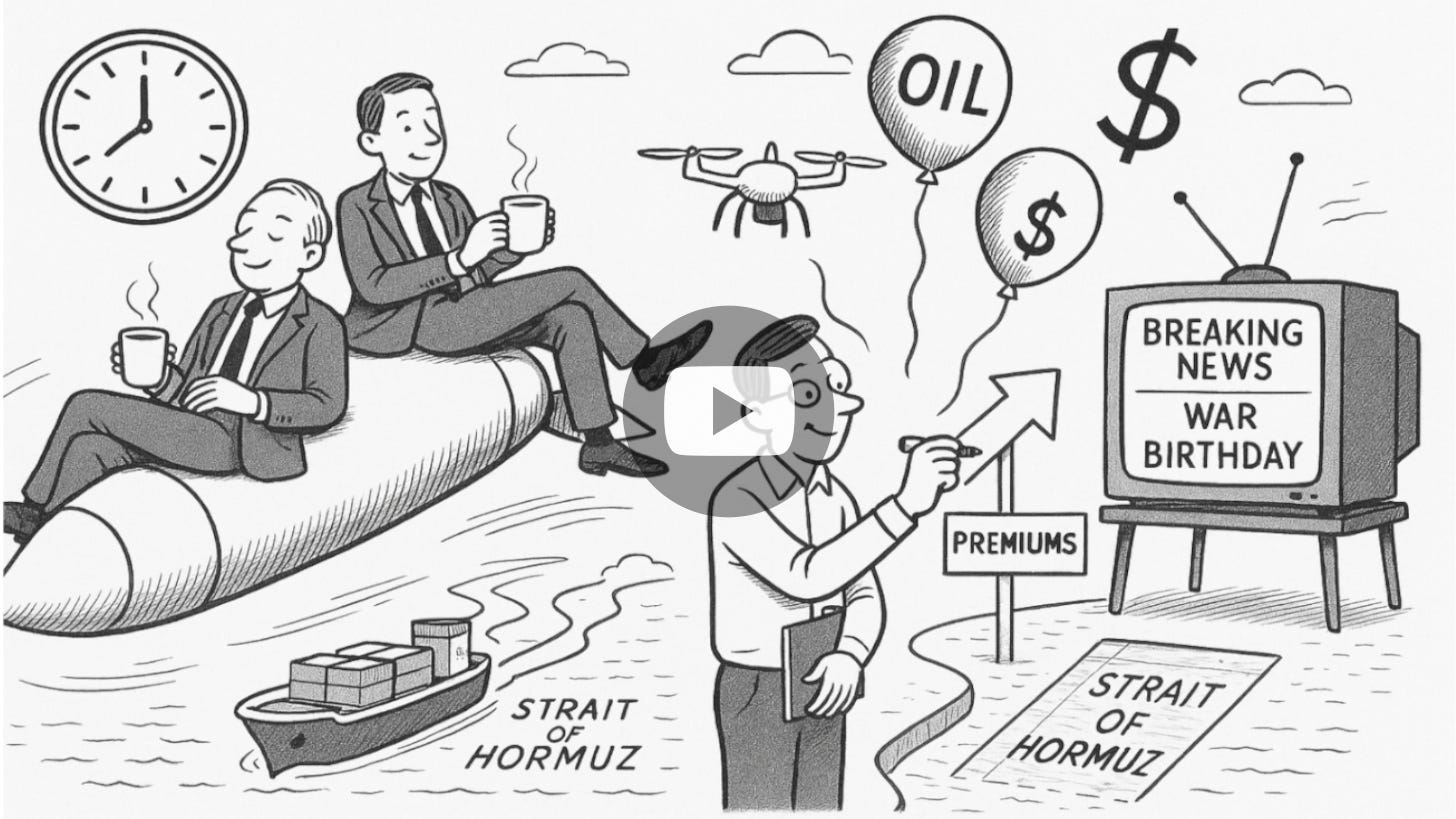
Why a ceasefire rally, a crude collapse and a buyback blackout add up to complacency, and how that shapes a defined-risk lean in Affirm (AFRM).
Peace Sealed by Presidential Post
The whole war fit inside a long weekend. Some bunker-busters, a few stray drones, rival midnight deadlines, and then a ceasefire announced the way everything is announced now, by presidential post. Crude shed 9% and its war premium with it, screens went the colour of mouthwash, and the Bloomberg conflict ticker aged into something you scroll past. Wall Street filed it under crisis averted and opened the next tab.
What bothers me is the speed of the forgetting. In the days before that post, traders were grabbing crude calls as insurance against the end of the world; within hours of it, the same calls were being dumped. Systematic funds swung from careful accumulation to relentless selling. Equities climbed even though a buyback blackout covering roughly 70% of companies was quietly draining the bid beneath them. The market behaved as if Hormuz were a canal for pleasure boats and energy risk had an off switch you flip with an emoji.
Insurers Are Still on Strike
Years of central-bank sedation have retrained risk sensors to ignore anything that resolves faster than a streaming mini-series. The people who price hulls and cargo have no such training. Underwriters have pushed premiums on Gulf voyages to their highest level in many years, and a trending ceasefire did not bring them down. Stopping missiles turns out to be the easy part; calming actuaries takes longer. Futures have dropped their war premium, but every barrel leaving the region still pays a fear premium at the insurance desk.
So the volatility complex is treating this as the closing credits while the sequel is already in production. Shipping lanes have been rerouted and do not snap back on a headline. Insurers are, in effect, on strike. And a White House has just learned that a limited war can lift poll numbers without denting the Dow, a lesson nobody unlearns quickly. Complacency is back, and it arrived with a tan.
Firm About Affirm
For an options trader the interesting part is what compressed fear does to the price of a view. When the crowd decides the story is over, premium drains out of everything, and the cost of expressing a modest opinion with defined risk falls with it. That cuts both ways: the complacency that cheapens a lean also deepens the air pocket when the sequel begins. In this kind of tape I would rather pay a known amount for direction than collect premium against a calm I do not believe in.
That is why the Tuesday Target lands on Affirm. The brief was a high-beta name I could be slightly bullish on, where earnings touch the position only indirectly before the options run off, so the idea rides the tape instead of a binary print. Affirm fits, and yes, I feel firm about it. The chart is tidy, the narrative still has legs, and the downside is known before entry. The structure itself lives in the letter.
Boardrooms, Baskets and a Footnote
The signals worth tracking all rhyme with the main theme: crowded confidence meeting something structural. Goldman's AI basket is printing new highs with RSI deep in overbought territory, semiconductors are beating software by the widest gap in ages, and positioning this heavy invites an air pocket. The MicroStrategy playbook of issuing long-dated debt to hold bitcoin has gone international; Metaplanet in Japan trades at a lush premium to its net asset value, and premiums like that have a habit of snapping back, with the debt underneath mattering more than the coin on top.
Then the quieter signals. CEO confidence keeps sliding while analysts lift earnings forecasts to fresh records; the people who control capex and hiring are pulling back while the people who model them are not. That gap closes eventually, and corporate guidance and investment plans over the next few weeks are where it shows up. Regulators are also preparing to trim the enhanced supplementary leverage ratio for the big US banks, a tweak that could unlock hundreds of billions of balance-sheet capacity, most of it likely headed into Treasuries or back to shareholders, a structural tilt dressed as a regulatory footnote. In a market that has just decided a war is a rounding error, footnotes are where the real moves hide.
- AFRM
What came of it
I closed this trade on 4 August 2025, after 42 days, at +21% on the capital at risk.
Get the next Tuesday Target free
One options trade. Every Tuesday. Scored in public. The exit rule is on the card, and the letter is free to read.