Rumble (RUM): Animal Spirits, Tariff Noise and a Loud Consumer
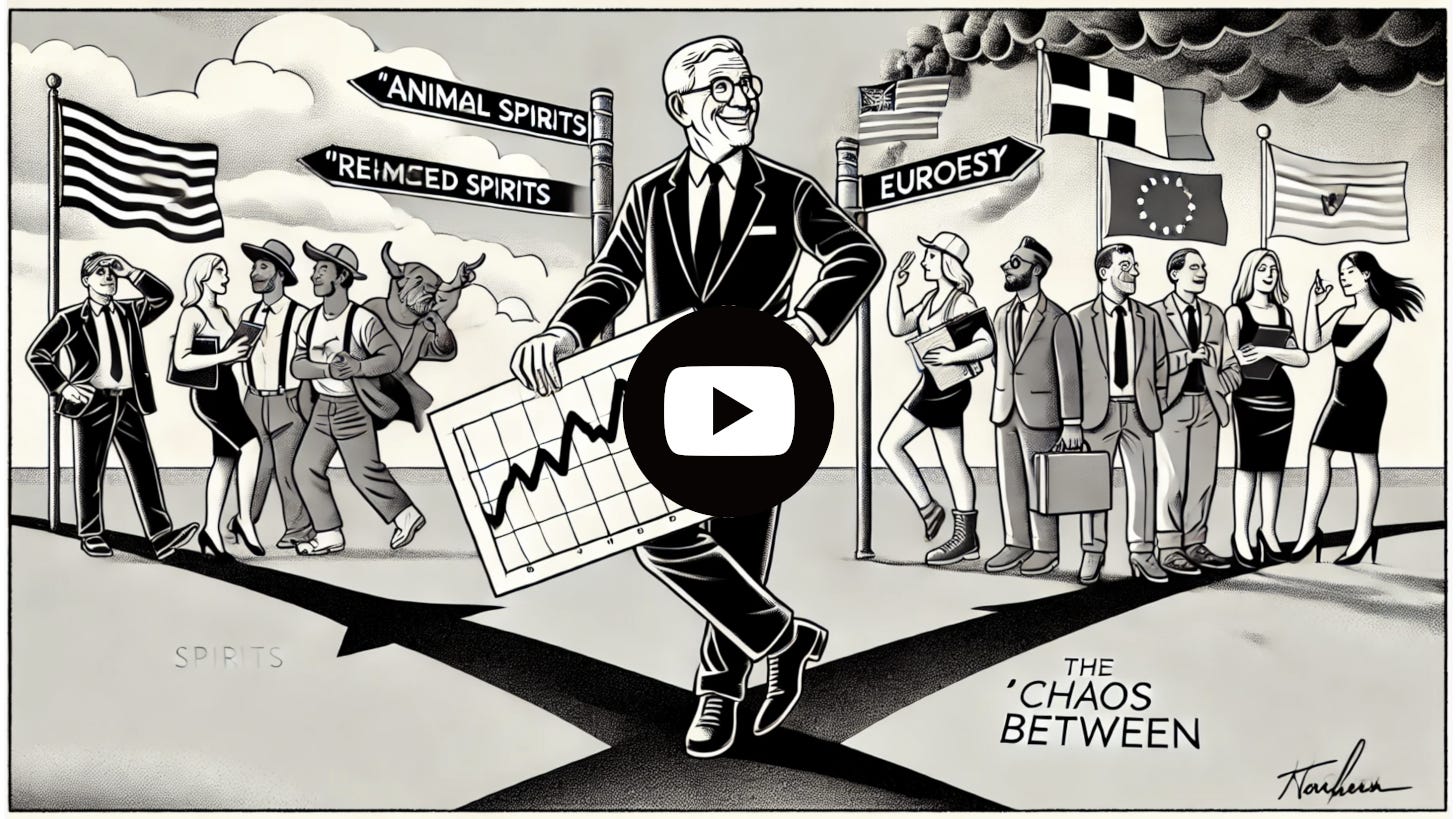
Why tariff rhetoric, a resilient US consumer and returning animal spirits keep volatility bid, and what that means for Rumble (RUM) options.
Animal Spirits Meet Helicopter Parents
Stanley Druckenmiller has spent decades in markets without ever needing an agenda, which is why I listen when he says something this blunt: America is probably moving from the most anti-business administration in memory to its mirror image. He rarely stays lonely for long. CEO confidence has jumped 32%, boardroom mood has flipped from bracing to building, and the hunger for change is close to physical.
Across the Atlantic the reaction has been less composed. European newspapers, unwilling to admit that a competent Republican inner circle might exist, treat every headline out of Washington the way a helicopter parent treats a scraped knee. Sneer at the West, mock the East, sink somewhere in between. Repairing their own house appears to be nobody's assignment. The letter calls this the move from winning to whining, and the label fits: the winning side has a plan it can execute, the whining side has commentary.
Tariffs, Shipped Dollars and Card Swipes
The substance under the noise is tariffs. Nothing broad has landed yet, but the White House has published a maximalist roadmap pointed at Canada, Mexico and points beyond, with a plausible cost of more than a point on core inflation if it is followed through. Markets exhaled when the timetable slipped, and the exhale is the interesting part. Policy stays fluid, and fluid policy keeps the dollar's risk premium elevated even while strategists insist universal tariffs, China included, sit low on the immediate list. If levies arrive, producers hand the bill to shoppers.
Those shoppers, so far, refuse to flinch. Retailers sound constructive, banks report a rebound in card transactions, and travel spending holds up best at the expensive end. A steady labor market and modest wage growth explain most of it. Nobody calls it euphoria, yet it is enough to support anything sensitive to growth, and it complicates the tariff story: a consumer this healthy can absorb passed-through costs for a while before the data shows it.
The deeper tension is structural. America keeps its reserve currency role partly by running trade deficits and pushing dollars into the world. Squeeze those outflows with tariffs and countries carrying dollar debt may raise the cash by selling US assets, which brings volatility in from an unexpected direction. Reshoring factories, meanwhile, demands infrastructure, trained workers and probably a weaker dollar. Reserve status and industrial ambition pull against each other, and that is the macro puzzle of the year, with no clean answer in sight.
The Casino Across the Hall
While Washington argues about levies and liquidity, meme coins keep printing eye-popping market caps overnight, cheered on by political endorsements and oversized personalities. Insiders usually hold the bulk of the stake, so the froth turns sour the moment the crowd looks elsewhere. For anyone pricing options, the lesson is about what survives: utility, fundamentals and disciplined liquidity outlast every mania, and the mania itself is a reminder that single-name volatility carries an expiry of its own.
Rumble, Lawsuits and the Cloud
Which brings the letter back to Rumble. The name carries volatility as a standing feature, plus government ties, a cloud services business, large investments and lawsuits layered on top. Each of those manufactures headlines, and headlines are the raw material an options trader works with. The tariff backdrop sits underneath: an elevated dollar risk premium and fluid policy give implied volatility across the tape reasons to stay bid, while a resilient consumer props up the growth side of the ledger.
What has my attention: whether the roadmap turns into actual levies on Canada and Mexico or keeps slipping; the next round of retailer commentary and bank card data, since the consumer is the shock absorber for everything above; the dollar, as the cleanest read on how seriously markets take the threat; any sign that foreign holders of dollar debt are lightening US assets; and on Rumble itself, the flow of news around its lawsuits, its investments and its cloud arm, because that is where the volatility gets made. Winning and whining both make noise; only the former moves a chart.
What came of it
I closed this trade on 10 February 2025 at +48% on the capital at risk.
Get the next Tuesday Target free
One options trade. Every Tuesday. Scored in public. The exit rule is on the card, and the letter is free to read.