The Fed (Powell Put): Strategic Confusion as the Real Safety Net
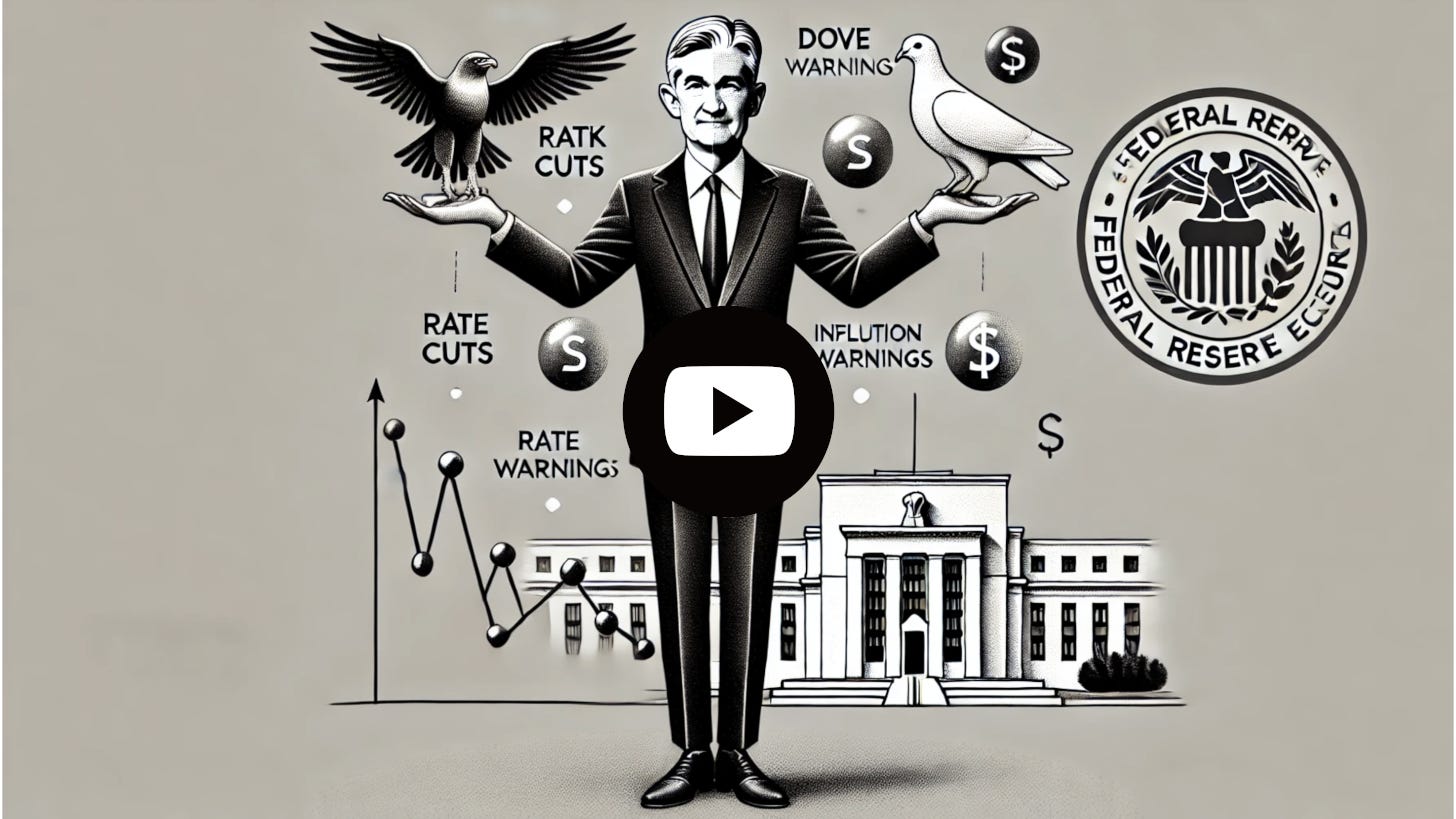
Why Powell's contradictory Fed signals work as a stealth put, and what dollar politics, rearmament and fund flows mean for options premium.
The Put Hidden in Contradictions
Jerome Powell stood up and argued both sides at once. The projections still pencil in two rate cuts, yet the description of the economy that came with them leans sluggish. The balance sheet runoff gets slowed while the same man tells the room to look past the Michigan survey's inflation scare. He also concedes that tariffs are nudging prices higher. Too hawkish for the easy-money crowd, too soft for anyone worried about inflation, unsatisfying to both. The commentariat has been arguing ever since whether this is a brand-new Powell Put or a central bank in need of a better PR team.
My reading is less charitable to the pundits and more charitable to Powell. The contradictions are the policy. Dangle enough conflicting signals and no desk can position ahead of the next decision, because nobody knows which Powell turns up. Stagflation warnings in the morning, liquidity constraints quietly loosened by the afternoon. When the rules keep moving, a clean trend never forms, and without a clean trend the crowd has nothing to pile onto. That is the real safety net, hidden inside the muddle rather than written into any promise. It also buys time against the larger monsters waiting offstage: the fiscal drama, the tariff programme, the next election.
Fires Behind the Fog
Chatter about a Mar-a-Lago accord has spooked the foreigners who hold American paper. Once tariffs, sanctions and capital controls are discussed as instruments of statecraft, the reserve status of the greenback turns from a fixed assumption into an open question. The risk flagged in the letter is an outflow from US markets, with a softer dollar and patchy liquidity as side effects. How far policymakers are willing to test that status is the thing to keep an eye on, because every test invites a repricing of what foreigners demand for staying.
Europe, meanwhile, is arming. Defence budgets are rising and industrial programmes are being stood up in the name of strategic autonomy. Good for local order books, but the bill arrives as pressure on raw materials, labour and supply chains, and the early bureaucratic bottlenecks suggest the effort will feed inflation before it feeds growth. For a Fed already squinting at tariff-driven prices, that is another reason to stay vague.
Then the flows. Systematic funds and hedge managers shovelled equities out the door and made the correction uglier than the headlines justified. Newer data hints the selling has eased, but nobody can say whether that marks the end or merely the eye of the storm. The asymmetry cuts both ways: a sudden rally squeezes whoever is still short, another bad headline starts the next wave. Timing that is a mug's game, which is why the positioning data earns a level of attention rather than a trigger.
Repairing a Broken Asset
There is no fresh target. The book already carries plenty of risk, and the choice is to wait for the next big move rather than manufacture one. Strategic confusion from the Fed translates, for an options trader, into a tape where the crash tail and the melt-up tail are both live, and premium is priced accordingly. Neither side of the trade looks cheap when the central bank's own message points in both directions, so patience does the work that a new position normally would.
What the letter offers instead is a repair job, warts included. A position that had been heading for a total write-off was worked down to a loss of roughly three quarters of the original stake. Nobody hangs a medal for that: the asset is still broken at the end. The value of walking through it step by step is the reminder that repair rarely resurrects a trade; it decides how much of the wreck you keep. In a market where the Fed's contradictions are the only reliable constant, knowing how to salvage counts for at least as much as knowing when to strike.
What came of it
The repaired position was MARA; I closed it on 21 March 2025 at -75% on the capital at risk.
Get the next Tuesday Target free
One options trade. Every Tuesday. Scored in public. The exit rule is on the card, and the letter is free to read.