CF Industries (CF): Fertilizer Outlasts the Headline Tape
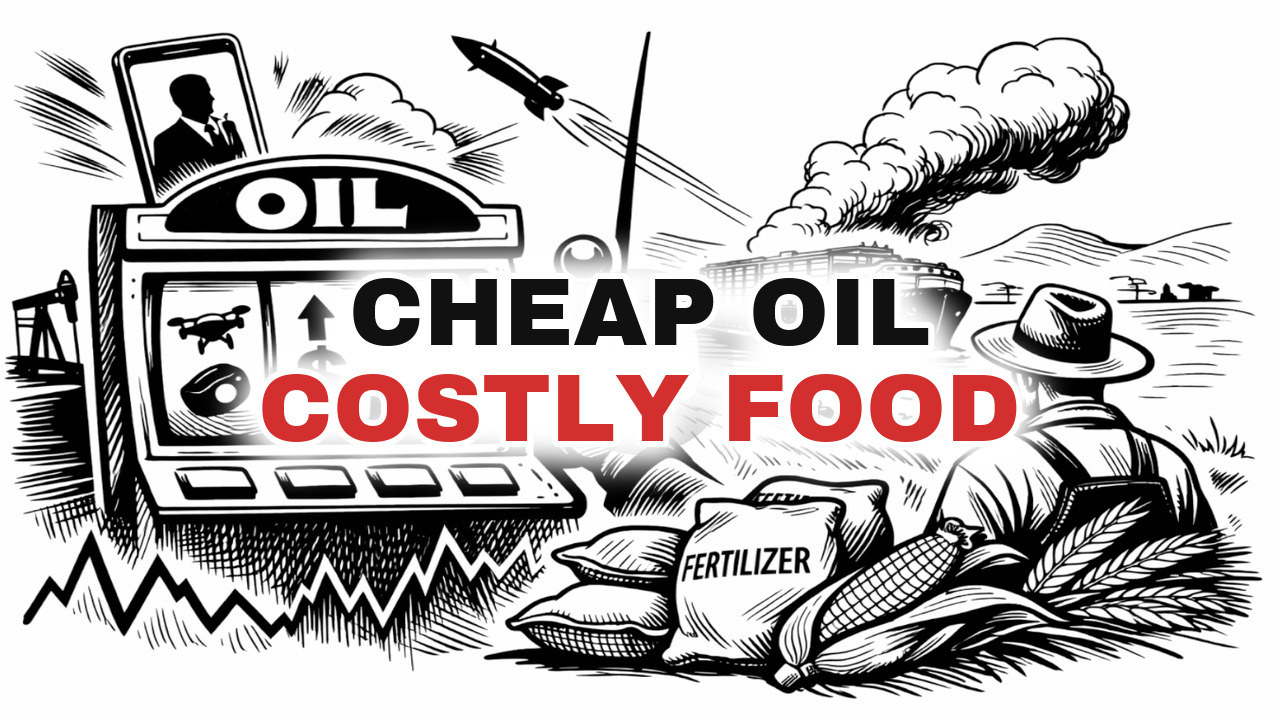
Why a nitrogen producer on cheap U.S. gas matters more than crude's headline whipsaw, and what the Hormuz fertilizer squeeze means for option traders.
A Tweet Against the Planting Season
Crude has been trading like a retail token. One session covered a $38 round trip, ripping on the open and collapsing after a president took a phone interview, a harder shove than any OPEC communiqué has ever managed. The oil ETF crowd set a volume record buying near the high and watched the position evaporate before the bell. A flat close after that, and the herd decides the crisis is over. The tape reports what the crowd did, and nothing about what ships did.
The quieter fact sits in the same strait. Roughly 45% of the world's fertilizer trade moves through a waterway that is, in every practical sense, closed. Urea futures noticed before the equity crowd did. Expensive nitrogen turns into expensive corn, soybeans and wheat with a lag measured in growing seasons, and a season does not reopen because a ceasefire gets announced. Oil can be talked down in the time it takes to read a post. A field that missed its fertilizer window stays missed.
There is a political tail too. A lingering blockade invites Washington to float restrictions on petroleum exports, pinning domestic crude at home while the seaborne benchmark goes vertical, allies under the bus in a midterm year. The spread between them would become the real story.
Cheap Gas on the Right Side
That is where CF Industries fits. It makes ammonia and urea off American natural gas, which stays cheap, and sells into a global market where competitors' feedstock, above all in Europe, is climbing back toward the levels of the last gas crisis. The margin expands from both ends: inputs that barely move at home, outputs repriced by a blockade. Crude longs get paid for guessing the next headline correctly. A nitrogen producer gets paid for physical supply chains taking months to unknot, whichever way the diplomacy breaks.
For an options trader that distinction is the whole point. Crude volatility is headline gamma now; holding either direction across a presidential phone call is a coin flip with a bad payout. Fertilizer's move is slower, stickier, and unlikely to reverse on a single post. The structure the letter sketches on CF is a defined-risk call spread, which caps the damage if the thesis is early and still pays if the cost divergence keeps widening. The logic travels: in a tape where the loudest instrument can round-trip inside a session, the position with a slow fuse and a hard floor is the one that survives the noise.
Sedatives, Machines and the Herd
Strategic reserve releases can knock the print down for a few sessions and buy politicians a news cycle, but the bottleneck lives in transit: insurers, freight rates, and crews willing to sail. Emergency barrels sedate the market. They cure nothing.
Then the machines. Trend followers are still estimated to be equity sellers into flat or weaker tape, with the trigger sitting around medium-term S&P levels. Geopolitics starts a move; mechanical flow finishes it, which is why modest headlines are producing immodest reactions.
And the herd has not folded. Individuals kept buying stock and options through the shock, which cushions dips and also postpones the flush. Resilience without de-risking tends to show up later as an air pocket rather than a washout.
Stale Prints and a Sentiment Wildcard
The data calendar is crowded and backward-looking. February CPI on Wednesday, then Friday's January core PCE with income, spending, durable goods, JOLTS and the Michigan survey; housing starts and existing home sales land mid-week. None of those windows were open when the oil shock hit, so the headline prints describe a world that has already gone. The exception is Michigan's inflation expectations line. If consumers are already pricing a pump that looks like a crisis, that single reading can shift the Fed conversation faster than the hard data.
Beyond the prints: whether tankers move through the strait, urea futures as the thermometer for the food chain, the S&P against the machines' levels, and any Washington murmur about export bans. Crude keeps supplying the drama. Food is where the history gets written.
This page is the write-up. The full letter, with the trade and its exit rule, is on Substack.
Get the next Tuesday Target free
One options trade. Every Tuesday. Scored in public. The exit rule is on the card, and the letter is free to read.