Crude Oil Futures (/CL): Collateral Hunting Behind the Fed Fight
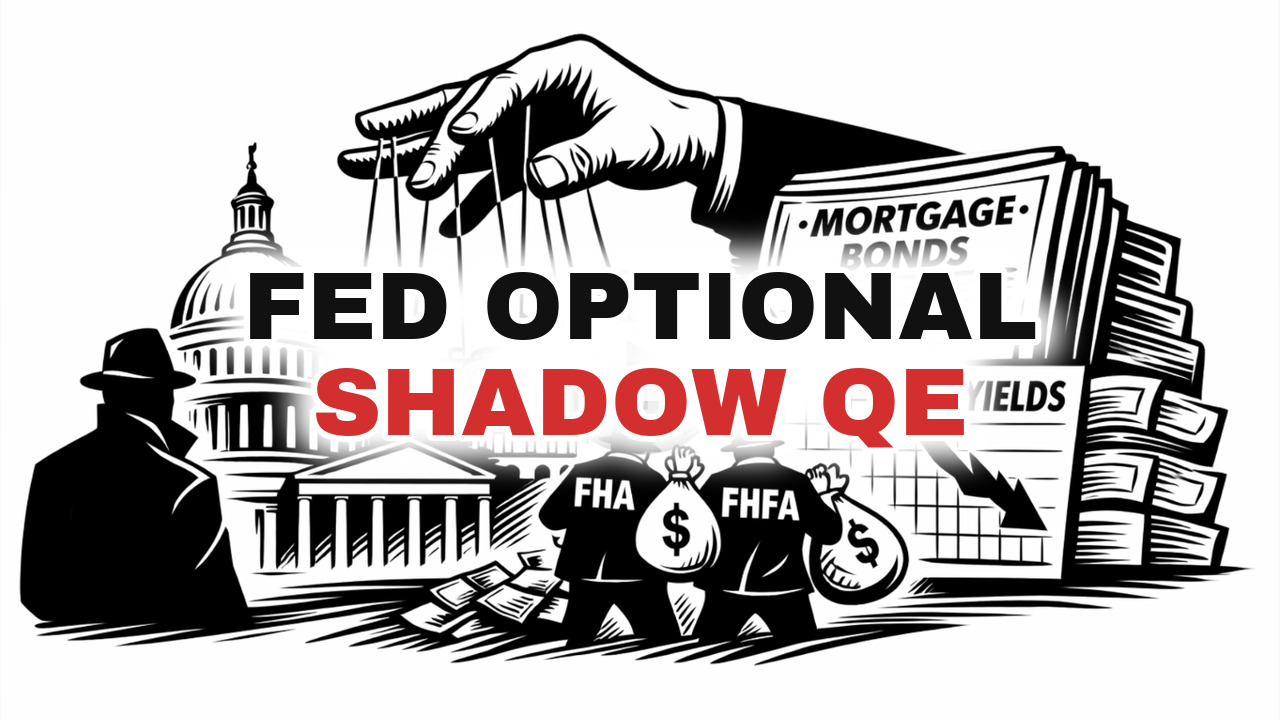
Why Shadow QE through Fannie and Freddie and a resource-grabbing White House leave crude fully priced, and what options traders can read from it.
What came of it
The Trade Alert on /CL closed on 11 February 2026, after 33 days, at -15% on the capital at risk.
Shadow QE Skips the Building
Everyone I talk to wants to know who wins the courtroom fight between the DOJ and the Federal Reserve. I find the question quaint. While the cameras point at the marble, the administration told Fannie and Freddie to swallow $200 billion of mortgage paper, and the argument over who chairs the central bank lost most of its stakes. If an agency can be instructed to become the marginal buyer of duration, you have yield curve control by executive memo. The letter calls it Shadow QE: liquidity arrives, rates get leaned on, and nobody at the Fed had to vote.
Independence was always a convention rather than a law of physics, and conventions last only as long as the people in power find them useful. What replaces it is a state that treats its own agencies as a balance sheet to deploy, a different animal to price than a committee publishing dot plots.
Collateral for a Diluted Currency
Once the printing runs through the side door, the foreign policy reads like an acquisition memo. Bids for Greenland, a forced change of management in Venezuela, sudden appetite for uranium, heavy crude and rare earths: this is a leveraged buyer hunting hard assets to set against a currency it intends to dilute. I called it Resource Imperialism in the letter and meant it literally. Physical collateral now ranks above decorum.
Australia opening a strategic reserve for critical minerals says the idea has gone global. Governments have appointed themselves buyers of last resort, and a buyer of last resort is a price floor with a flag on it. The tariff aimed at anyone trading with Iran fits the pattern: nominally a regional sanction, in practice a strike at Beijing as the largest taker of Iranian barrels, and a reopening of the trade war without a declaration.
Boards Outvote the President
Here the story turns useful for someone who trades crude rather than opinions. The White House can order agencies to buy bonds. It cannot order an oil major's board to spend billions in a country its own risk committee considers uninvestable, and the chief executives have said as much. Capital expenditure carries a veto that mortgage paper lacks, and that veto sits between the political wish for cheap oil and the physical fact of it.
So the mismatch runs between a mandate and a balance sheet. Politically, the pressure on the barrel points down; a president who wants Venezuelan output flooding the market is no friend of the bull case. Operationally, the barrels that would do the flooding need boards that refuse to sign. My reading is that crude sits fully priced, perhaps a touch rich, even after paying respect to the geopolitical risk in the tape. That is a view about where the range is, and a range is something an options trader can express without pretending to know the next headline. Futures options help because a spread can be narrowed to size the exposure down to what an account can carry.
The broader point applies to oil too: volatility is quoted as though the institutions were at peace, and they are anything but. Insurance at nirvana prices during a constitutional brawl looks like the cheapest thing on the board.
Broken Instruments and Bank Decks
The inflation prints land with broken instruments. Shutdown gaps mean CPI and the PPI that follows are partly modelled rather than measured, which lets the Fed insist disinflation is intact while insurance premiums and tariff pass-through climb in the actual economy. I treat the reaction to those numbers as information about positioning, not about prices.
The sharper read arrives when the money centre banks, JPMorgan at the front, open their fourth quarter decks and show whether the consumer is resilient or coasting on fumes. Remember that retroactive tax refunds are about to hit accounts in the first quarter, a one-off flush that can make retail sales look healthier than the labour market beneath them. Layer Friday's options expiration on top and murky data collides with a market priced for perfection. For crude, I am watching whether the barrel keeps shrugging at the Iran tariff, and whether any oil major changes its mind about Venezuela. Until one does, the range holds and the fog is the trade.
This page is the write-up. The full letter, with the trade and its exit rule, is on Substack.
Get the next Tuesday Target free
One options trade. Every Tuesday. Scored in public. The exit rule is on the card, and the letter is free to read.