Crude Oil Futures (/CL): Lifeboats, Blockades and a Fat Fear Premium
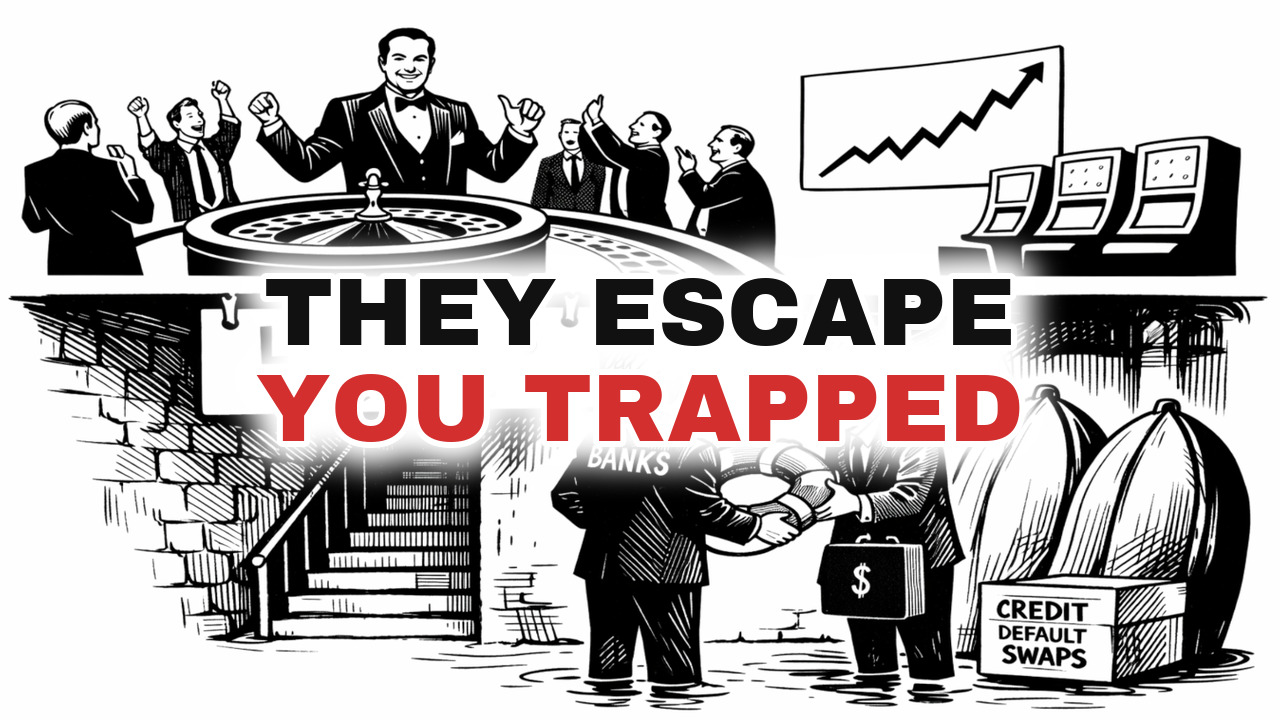
How a mechanical rally, a timed Hormuz blockade and banks hedging their own product leave crude carrying the market's fattest fear premium.
What came of it
The Trade Alert on /CLN6 closed on 26 May 2026, after 40 days, at -7.3% on the capital at risk.
The Blueprint of the Holes
The letter opens with the victory lap: a string of green sessions on the Nasdaq, the longest S&P run in months, Goldman's traders declaring the worst over. The bulk of the bounce came from machines that had to close shorts, trend followers buying because their rules said so, plus the biggest weekly squeeze in ETF shorts in a decade. Nobody chose to own this market. They were marched back into it. The earnings story has the same hollow ring, with Nvidia and Micron carrying most of the growth everyone is toasting.
The part that made me sit up is in the plumbing. Goldman, JPMorgan, BofA, Deutsche Bank and Barclays are about to launch a credit default swap index that lets anyone short private credit managers outright, after spending years describing private credit as the safest yield available. Meanwhile the Fed is quietly asking those banks about their exposure, and the Treasury is running the identical exercise with insurers. When the operators of the casino start handing out lifeboats, together with a map of where the hull leaks, my question is who wants that insurance and why the timing suits them.
Escalation With a Stopwatch
The Hormuz blockade looks like escalation; the clock underneath it says negotiation. It was timed for the New York morning so markets and Beijing felt it in the same hour, and Iran's storage is full in roughly thirteen days, after which wells get shut in and the damage turns permanent. That is the lever: make China lean on Tehran before the barrels stop, and let the market sweat the standoff meanwhile.
For crude the result is a range with violent insides. July Brent lurches between its floor and its ceiling on every headline, and the volatility implied in oil sits far above what equities are pricing. The market treats this as a bounded shock, a staring contest rather than a siege, and staring contests reward whoever gets paid to wait. That is the shape of the idea in the letter: crude's fear premium looks inflated against a stalemate that keeps grinding sideways, and time decay works for the side that has already collected it.
The mirror image sits in equities. The VIX slumped back to pre-conflict levels on the ceasefire rally, QQQ implied volatility is cheap against what the index actually does, and dealers are short upside gamma, so any squeeze forces them to chase. Expensive fear in oil, cheap fear in tech, both attached to the same conflict. That asymmetry is what I want an options trader to carry away from this issue.
Michigan, Bankers and the Storage Clock
Away from the screens, households are in a mood the University of Michigan survey has never recorded, a print beneath the financial crisis, the lockdowns and the stagflation years, while the S&P sits a whisker from its record. Gaps that wide between how people feel and how portfolios look are not known for their patience, and most of the Bloomberg commodity basket is tied to the Iran conflict. A supply shock that lifts inflation while dragging on growth punishes bonds and stocks in the same breath, which leaves commodities as the rare hedge still standing and puts crude at the intersection of every theme in the letter.
The calendar: bank earnings open with JPMorgan and Citi, scripted to project an unshakeable consumer, and after the Michigan print the thing to listen for is how hard they have to work to say it. Then US producer prices, Chinese GDP and the ECB minutes, each able to expose the cost pressures the rally ignores, with dozens of central bankers talking yields down before their blackout. Beyond the calendar, the clocks. Goldman's $43 billion of trend-following demand is mechanical and conditional on price holding; a genuine pullback flips those algorithms from bid to offer. Iran's storage fills on its own schedule whatever gets said at a podium. The day the wells start shutting in, the range-bound assumption in oil gets tested, along with everyone collecting on it.
This page is the write-up. The full letter, with the trade and its exit rule, is on Substack.
Get the next Tuesday Target free
One options trade. Every Tuesday. Scored in public. The exit rule is on the card, and the letter is free to read.