The Dow (DIA): Fencing the Quietest Index on the Tape
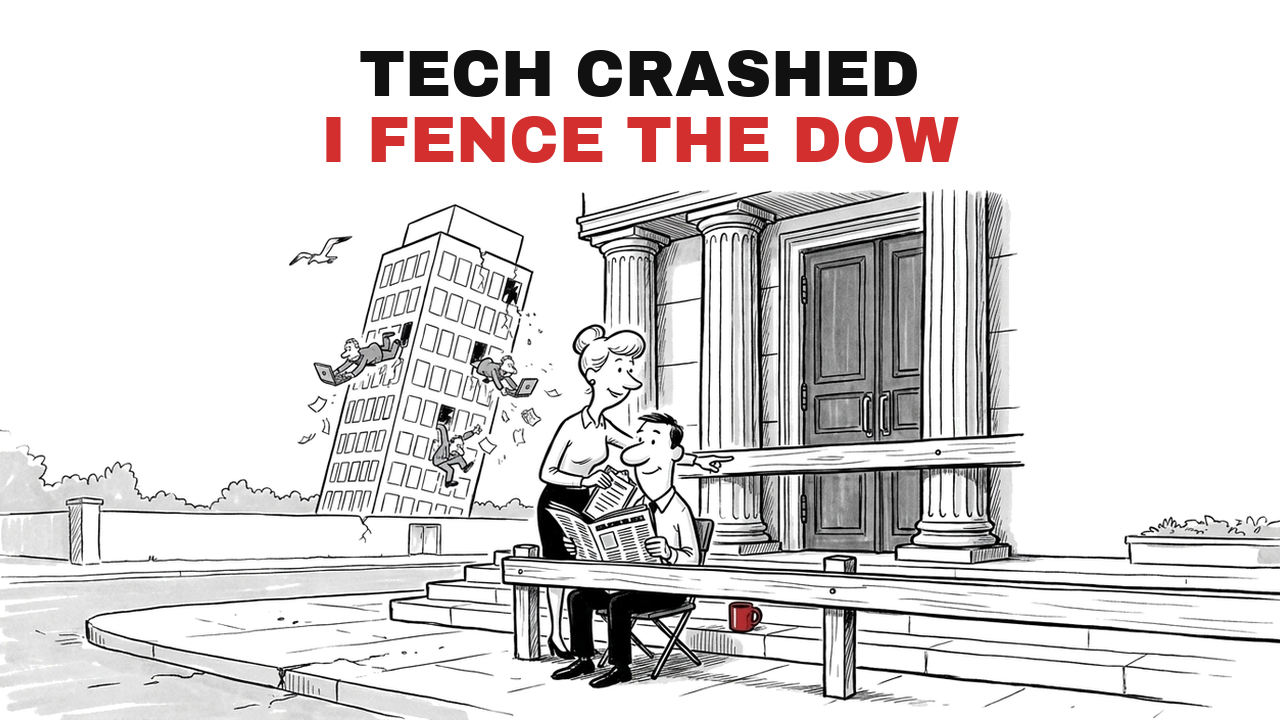
Why the Dow sat still while tech cracked, why its options price more motion than it shows, and what November's prints mean for a range trade.
Money Fled to the Old Economy
October is when the AI trade stopped carrying everything else. The Nasdaq 100 gave back 6.7 percent, by Goldman's reckoning its worst month against the equal-weight S&P since the century was young. Money leaving a crowded trade has to land somewhere, and it landed in the dullest corner of the tape: the Dow, that museum of old economy names, finished October higher, and consumer staples had, on BTIG's count, their best month in a generation. DIA is up on the year and sits a little under its August record close.
The rotation gets the headlines. What interests me is how the Dow behaves while it happens: like a sleepy fund, with realized volatility around 10, while its options into the back end of the year are priced at 16. When options are priced for more motion than the index shows, somebody is paying for insurance they may never use, and I am happy to write it.
Fence With a Low Top Rail
The structure is an iron condor: a put and a call sold close to the current price, a cheaper put and call bought further out, so the worst case is fixed before the position exists, and I keep the credit if DIA stays inside the short strikes. The shape of the fence is the point. I have set it off center, with a long stretch of road underneath the price and a short one above it, so the position does best if the Dow drifts gently lower or goes nowhere, and the upside threatens it first.
That lean is deliberate. Most readers already own plenty of stock, and a position that pays while the rotation rally catches its breath is a useful counterweight to a book that is long everything. Something else favors a fence on this index: because of how Dow options are positioned, the dealers who hedge them push back against every move, which keeps the index drowsy, while in the Nasdaq their hedging amplifies the swings. The plumbing itself leans toward calm.
The Houses Bet Against Each Other
A range trade wants disagreement, and the big houses are supplying it. Over at Bank of America, Michael Hartnett remains risk-off into mid-November. Morgan Stanley's Mike Wilson expects a final washout before the market reaches his year-end target. UBS notes that November, the strongest month on the calendar, arrives with shorts near record size, the raw material of a squeeze. JPMorgan points to the S&P finishing higher a year after every midterm since the middle of the last century. I collect premium from all of them and lean toward Hartnett.
The midterm is the piece worth reading slowly. JPMorgan makes a Democratic sweep the likeliest outcome, and it is also the only result on the bank's S&P map that includes a small loss; a split Congress and a Republican hold both point higher. For a fence with a low top rail the friendly result is the quiet one, and the crowded short book is what could turn a post-election bounce into the rally that breaks the box.
Prints Inside the Fence
A handful of prints sit inside the trade's life: the Treasury refunding, the jobs report, the inflation print, then Home Depot and Nvidia reporting in the middle of November. If DIA is parked near either break-even going into any of them, I close early and keep what is left. The planned exit is early December, well before expiry, sooner if a fast move has done real damage and the story has changed.
On the record, boxes like this on the Dow have held about as often as they have broken, and every break came on the upside. Everything rests on the rotation rally pausing. If the old economy keeps swallowing money fleeing the Nasdaq at October's pace, the top rail goes first. If it slows, the Dow does what it has done all year, which is very little, and the insurance I wrote expires quietly.
This page is the write-up. The full letter, with the trade and its exit rule, is on Substack.
- DIA
- Iron Condor
Get the next Tuesday Target free
One options trade. Every Tuesday. Scored in public. The exit rule is on the card, and the letter is free to read.