Taking the Other Side of a Put Stampede (SPY)
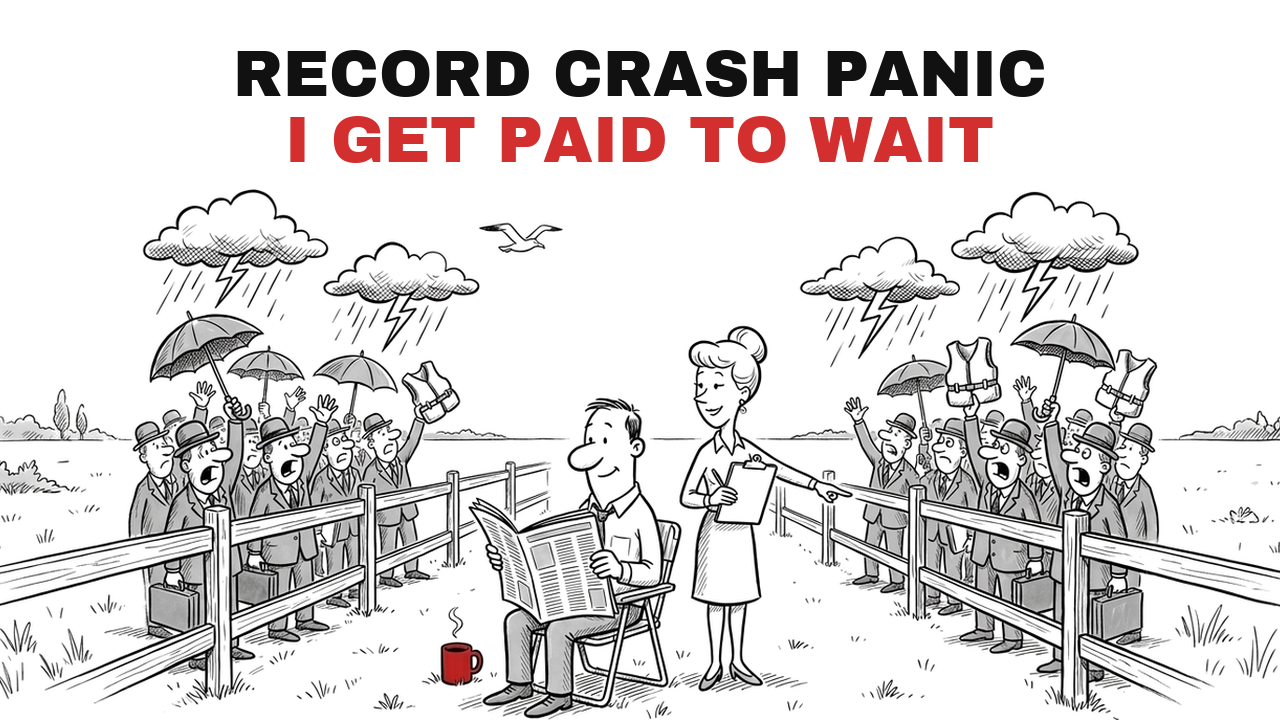
Why a stampede into index puts leaves SPY's December options expensive, and how a lopsided iron condor collects from the panic.
Crash Insurance at Panic Prices
On the Friday before this letter went out, traders on the Cboe bought more index puts in a single session than on any day in years, by Goldman's count. The VIX finished just under 20. The index had slipped a little that day and a little more over the week, and SPY, the big S&P fund, settled a short walk below the record it set in early October. That tape read as a crowd deciding all at once that it wanted a parachute.
Insurance bought in a hurry costs more than insurance bought on a quiet afternoon, and the people buying it on Friday were in a hurry. Yet SPY has been behaving like a sleepy fund for weeks, while its December options have been priced for something far livelier. That gap, between how the fund actually moves and what its options charge for the right to bet on movement, is the whole trade. I take the other side of the stampede: I sell a range around the current price and pay for wings beyond it, so the worst outcome is known before the order is filled. The premium belongs to whoever is willing to sit still while everyone else fidgets.
Fence With a Short Top Rail
The fence leans. There is more ground between the current price and the lower rail than between the price and the upper rail, and that lopsidedness is deliberate. The lower rail sits beneath the September low and beneath the put wall. The upper rail sits above the record close, under the call wall, and roughly where Goldman's own year-end target lands. The market drew those lines itself; I have fenced the inside and tilted the roof.
For a reader who already owns plenty of stocks, that tilt is the point. Most portfolios are long the rally whether their owners admit it or not. A single position that pays if the rally stalls, drifts, or wanders sideways into year-end is a way to collect something for a pause without parting with anything you want to keep. The wings cap the damage, so the open question is patience: can SPY stay inside the box until late November, when I plan to step out a few weeks before expiry? If it sits comfortably mid-range I may linger. If a fast move eats about half the stake and the reasons for the trade have changed, I leave earlier and say so.
The big houses disagree, which is exactly what a range seller wants. Hartnett at Bank of America leans risk-off for the next few weeks. Pasquariello at Goldman expects November strength as buybacks return. JPMorgan points to the market's habit of rallying in the months after a midterm. Hedge funds have already cut exposure to a multi-year low. Each house has placed its chip; the condor collects rent from all of them while leaning a shade toward Hartnett's side of the table.
Where the Box Usually Breaks
Several events sit inside the fence. The Fed meets at the end of October. The midterms land the following week, the Treasury's refunding announcement follows the morning after, and a heavy slice of the S&P reports in the week ahead. Any of those can move the index in a session. My rule is mechanical: if SPY is pressed against either break-even going into any of them, I close before the coin is tossed.
The thin side is up. Over the past year a box shaped like this held about half the time, and almost every break came through the roof. So the rally has to pause for the top rail to survive, and that is the bearish lean in plain terms. Hartnett sees a skid of more than 10 percent if the Democrats sweep, the outcome the betting markets favour, and a decent gain on a split Congress. Goldman's own history is gentler, a modest median dip into midterms going back decades. Either way, the first weeks of November decide whether the premium collected from Friday's panic was rent or a loan.
This page is the write-up. The full letter, with the trade and its exit rule, is on Substack.
Get the next Tuesday Target free
One options trade. Every Tuesday. Scored in public. The exit rule is on the card, and the letter is free to read.