Brazil (EWZ) and the Crash Its Options Ignored
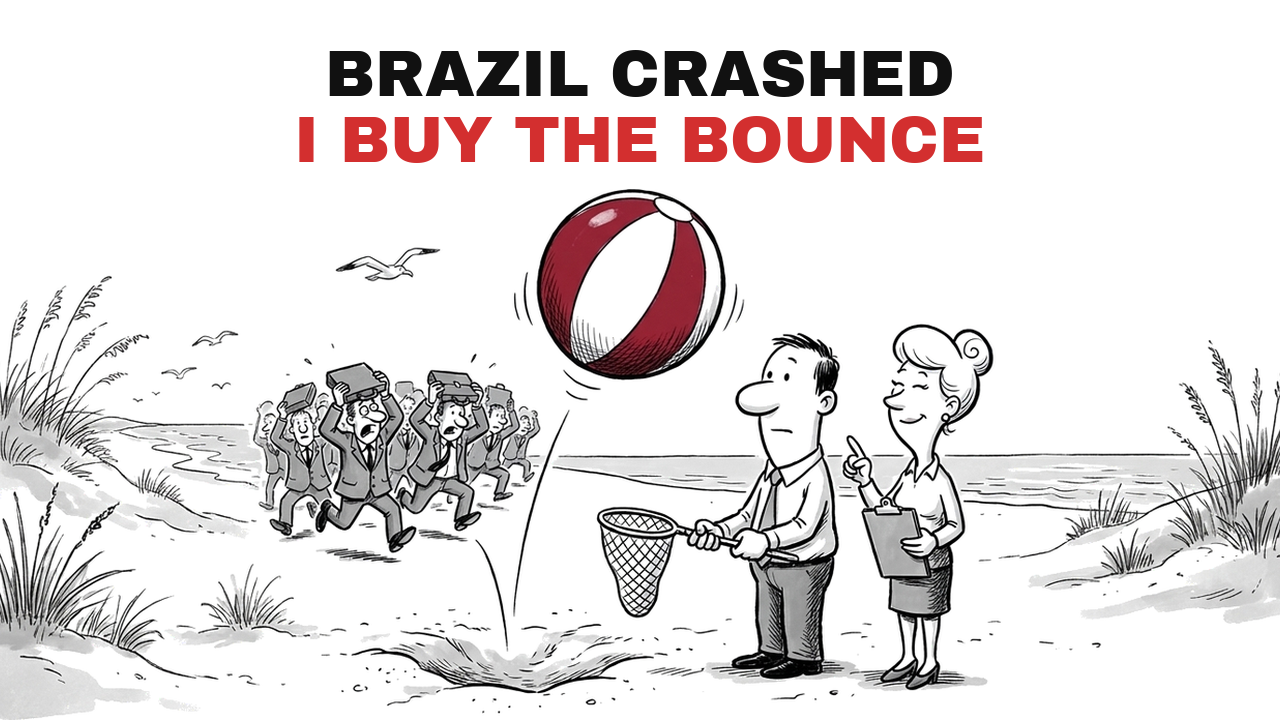
How a surprise Lula win crashed Brazil's EWZ fund, why its options stayed calm, and what a small long call on the rebound needs.
August Prices by the Closing Bell
Brazil's runoff went the way the crowd had bet against. Lula came from behind and took it, a result the prediction markets had treated as a long shot. The next morning the market did what markets do when the long shot lands: EWZ, the big Brazil fund, lost close to 20 percent, its ugliest session since the Covid crash. Ibovespa futures tripped a circuit breaker and the real took a beating. By the close the fund had surrendered weeks of gains and was sitting where it stood in August.
At its worst the fund was down far more than it finished, and it clawed back a meaningful chunk before the bell. Crashes built on a lone surprise have a habit of overshooting, and an intraday recovery of that size is what overshooting looks like. The fund gave back two months of gains on a single result, the kind of move that forced selling drives and that tends to ease once the sellers are empty.
Calls Priced for a Quieter Country
The part that interests me is what the options did while the shares were falling apart. They barely flinched. Calls a few months out carry an implied volatility lower than the fund's own realized movement in the weeks before the vote. The market has just delivered its most violent day in years and the option desks are pricing the coming months as if the drama is over. The panic never made it as far as the derivatives floor.
That mismatch is what turns a bounce opinion into an options trade. A long call caps the loss at the premium and leaves the upside open if the rebound runs. There is no stop to place because the premium is the stop, which changes the sizing: the letter risks less of the account than usual and treats the whole stake as money that can vanish. Every quiet week drains value from the contract, so a bounce that arrives slowly is worth less than the same bounce arriving fast. A cheap option is usually cheap because time is against it.
The Long Average Waits Overhead
The target the letter sets is modest on purpose: a partial recovery to the zone where the 200-day average sits, where a good slice of the crash is recovered. A move of that size asks only that the forced sellers run out of stock. The big houses are split. UBS sees further downside for Brazilian equities and JPMorgan trimmed its stance on the currency and local rates, while Société Générale is looking to buy the real at 5.70 to 5.75 per dollar and Brown Brothers Harriman reads the selloff as a chance to add. When the sell side cannot agree, the premium on fear tends to be the thing that moves.
The story breaks if the fund closes below the low it printed on the crash day. At that point the market is pricing a fiscal crisis, and a bounce trade has nothing left to say. Even then the letter sits on its hands: a call already paid for can recover over the months it has left, and nothing beyond the premium is on the line.
Budget Words, Courts and Vale
Start with fiscal language. Société Générale argues the market may steady quickly if the finance minister keeps hammering fiscal discipline. A credible budget message could lift the fund fast; a vague one leaves the pressure in place while the clock works against anyone long options. Lula also inherits a Congress that leans right, which caps how far spending can loosen. Then the courtroom. Flávio Bolsonaro wants the runoff annulled over an extension of voting hours, an effort UBS doubts will hold. Even a doomed challenge keeps a risk premium on the country for as long as it drags on.
And then earnings, which land inside the window. Vale goes before the others, Itaú follows within days, Petrobras after that. These are heavyweight holdings, and their numbers can move the whole fund in either direction before the political dust has settled. A country that fell this far on a surprise has room to climb on nothing more than the absence of another one.
This page is the write-up. The full letter, with the trade and its exit rule, is on Substack.
Get the next Tuesday Target free
One options trade. Every Tuesday. Scored in public. The exit rule is on the card, and the letter is free to read.