Financial Sector ETF (XLF): Where the Hormuz Dominoes Land
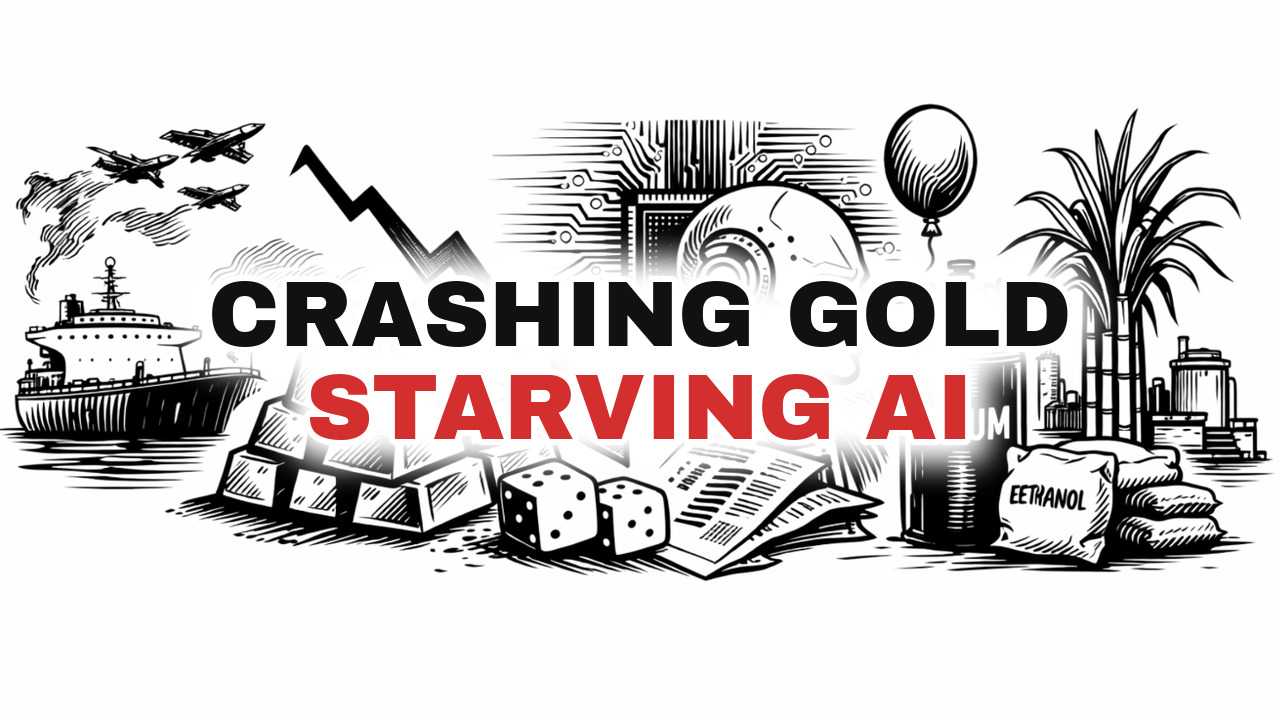
Why Hormuz's closure is crushing gold and starving chip fabs, and why washed-out financials via XLF can steady on stress merely ceasing to worsen.
Gold Bricks Sold at the Dock
When the Strait of Hormuz clamps shut, the reflex trade writes itself: crude higher, defense contractors higher, everyone shoving through the same crowded door. The letter skips the stampede and follows the damage further downstream, where the plumbing cracks quietly. Take gold. Gulf producers have oil stuck at the docks and bills due in dollars, so they are unloading physical bullion to raise cash. Sovereign buyers take the bricks at a discount. Retail traders in leveraged paper gold bleed out on the other side. A haven collapsing in wartime only looks odd until you ask who needs dollars.
The stranger domino runs through helium. Strikes on Qatari infrastructure took a third of global supply offline, and semiconductor foundries need that gas to cool their wafers. An AI build-out this large could trip over something everyone associates with party balloons. Agriculture gets its own twist: expensive crude pushes Brazilian mills to crush cane into ethanol, Gulf fertilizer sits stranded on the water, and a sugar deficit of historic size builds while nobody is looking.
A Collar Dressed as Diplomacy
The paragraph most useful to anyone who trades options concerns the rally that followed a conciliatory tweet. The index had been sliding toward a large put collar strike, and a break below it would have forced dealers to sell into weakness, the classic negative gamma spiral. The headline landed before that line gave way, dealers covered, shorts were run over, and the tape reversed with no regard for whether the news was true. Once the collar is visible, the headline reads less like information and more like a timing device.
The central bank keeps growing its balance sheet to keep bank reserves adequate, while a looming war funding request lands on a Treasury market already under strain. The letter calls that stealth monetization of a wartime deficit, and the label fits. Washington walks into its trade summit holding a strong hand, because the bulk of the oil that normally transits Hormuz was bound for Chinese ports, eighty percent of it by the letter's count. An importer starving for energy negotiates differently.
Financials Priced for Ugly Earnings
Which brings the letter to XLF. Financials sit among the most under-owned sectors, positioning is close to washout levels, and valuations already assume a nasty earnings season. The point is narrow: the sector can stabilize, or bounce modestly, on nothing more than macro stress ceasing to deteriorate. It only needs the bad news to pause.
That changes the shape of the options problem. Chasing a rumor-driven headline for direction hands premium to the algorithms. The letter's preference runs toward disciplined volatility structures that get paid by the chop itself, cash held back for the forced liquidations that produce real discounts, and under-owned corners such as software infrastructure and agricultural commodities. A washed-out sector ETF with low expectations is the sort of vehicle where a defined-risk expression fits, because crowd positioning alone supplies the asymmetry.
Rearview Mirror in a Minefield
The calendar brings flash PMIs and a final consumer sentiment reading. The letter files them under rearview metrics: they capture the blockade's initial shock, nothing more. The figure that matters is long-term inflation expectations, which scheduled central bank speakers will anchor on, most likely in a restrictive tone, sticky prices in every sentence and little sympathy for stalling growth. Hawkish talk into a supply shock while the balance sheet funds a war is a strange animal, and banks sit in the middle of it.
Beyond the data, the items worth attention are the trade summit and how hard Washington presses its energy leverage, the war funding request and its effect on a strained Treasury market, helium headlines out of Qatar as a proxy for the chip supply chain, and gold, which reads as a live meter of Gulf liquidity stress. If the metal stops falling, the producers have found their dollars. Either way, that is what the letter is waiting for: stress that has quit getting worse.
This page is the write-up. The full letter, with the trade and its exit rule, is on Substack.
Get the next Tuesday Target free
One options trade. Every Tuesday. Scored in public. The exit rule is on the card, and the letter is free to read.