Financials (XLF): A Wink From Washington Won't Patch the Fracture
Why softer tariff talk, a hard Beijing and reflexive retail dip-buying leave financials exposed, and what the letter watches next.
Good Cop Needs a Second Act
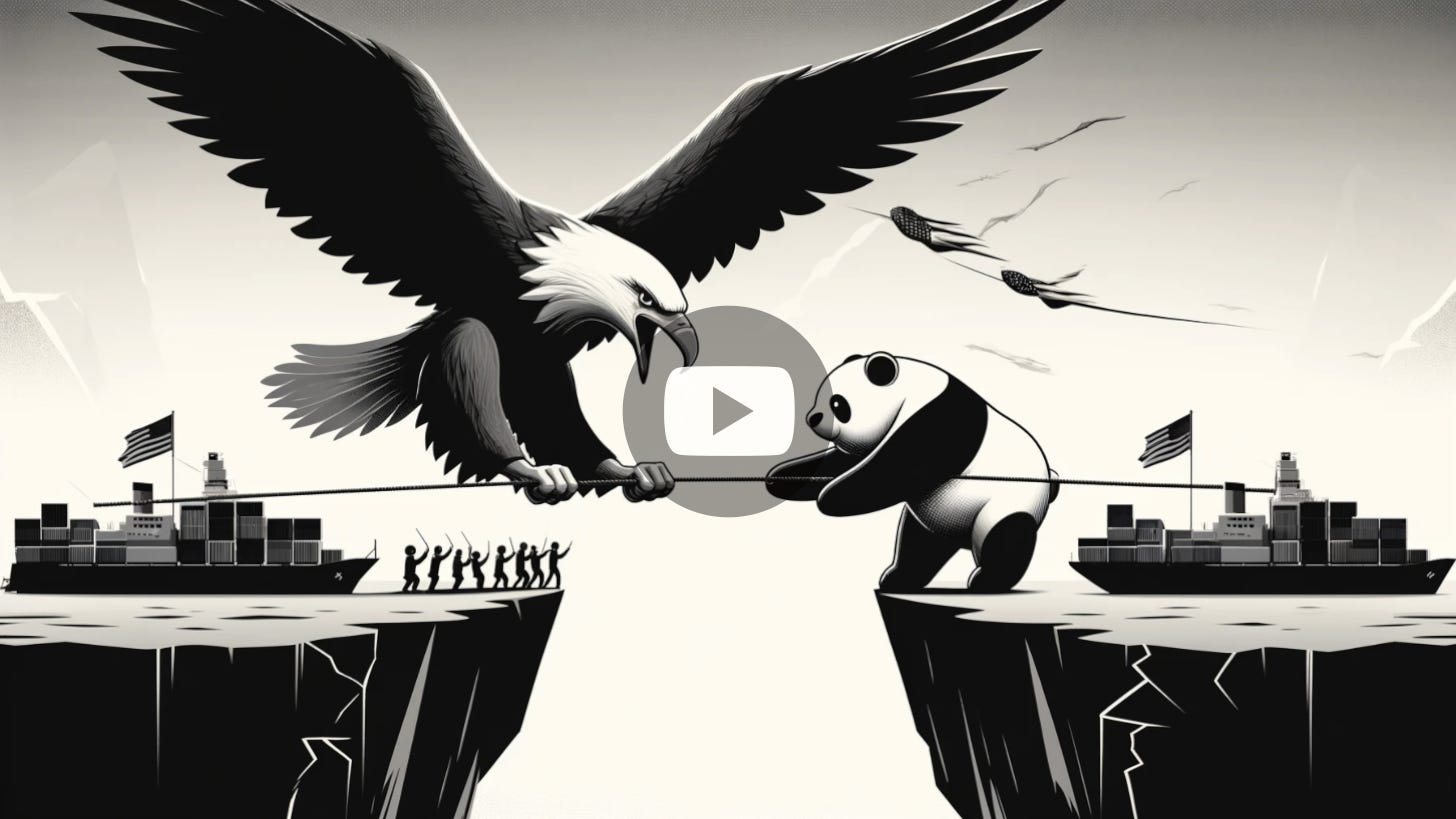
The letter opens on a reflex I find genuinely funny: the market's habit of exhaling every time Washington sounds a shade more diplomatic. An administration whose entire method is unpredictability floats the idea that tariffs could ease, and a large part of the trading crowd treats the sentence as a settlement. The other part reads Beijing, which keeps insisting the slate be wiped clean before real talks begin. Years of economic fracture, one softer adjective, and a wink. The letter asks whether that can hold, and its honest answer is that it has, for a while, before.
What I keep coming back to is the sequencing problem underneath. A president playing the friendly cop on trade needs a follow-up act, either something that bends Beijing or something that keeps his own voters convinced the game tilts America's way. Beijing's incentive runs the other direction: stretch the talks until Washington feels obliged to offer more than gestures. Two players, each rewarded for delay and theatre, and a market pricing the theatre as a signed document.
Every Dip a Discount Sale
Then there is the retail crowd, still trading as though the post-Covid run never ended. The letter's example is Apple at roughly 7.7 times sales, a level that looks like a floor only if you forget that in genuine crises the stock has changed hands at barely more than a single turn of revenue. Either these are the contrarians of the decade or they have not looked up at the sky.
The uncomfortable reading, which the letter takes seriously, is that the dip-buying reflex is at once the last support under a rickety structure and the thing most likely to knock it over. A crowd that has never been punished has no plan for the first time it is. If the believers leave together, the exit they picked in the calm turns out to be a turnstile. The letter pairs this with the bank flow-of-funds warnings it cites: the rush of systematic money out of the market has paused, liquidity stays thin, and a fresh volatility spike could empty the book in minutes and amplify whatever move started it.
Three Balls, No Juggler
Behind all of it sits the tariff paradox. Tariffs suppress growth and dampen demand, and they also tend to weaken the dollar and push foreign holders to shed American assets. A softer currency flatters exporters for a quarter or two, then shows up as inflation or as a bond market with a temper. Currency, rates and trade policy are three balls in the air, and nobody in the letter's telling has kept all of them up for long. Add the European Union's new fines on American tech and the regulatory pressure arrives from two continents, with the open question of how the White House folds retaliation into the trade talks.
For an options trader this reframes the exercise. Financials sit right on the fault line of a market swinging between an illusion of stability and a faceplant: they carry the dollar, the curve, the credit cycle and liquidity conditions all at once. The letter's stance on XLF is bearish, but the more useful part is the discipline around it. An existing position in that direction is already feeling some heat, and the letter's instinct is to clear it before repositioning rather than doubling into a view. Exit first, re-enter later: the least glamorous and most reusable idea in the issue.
What I am watching, all of it flagged in the letter: whether Washington's conciliatory language attaches to anything concrete or stays rhetorical; whether Beijing softens the clean-slate demand or hardens it; whether systematic outflows resume and how liquidity behaves the next time volatility jumps; how the White House answers Brussels; and whether the retail bid keeps showing up, or takes its first real absence and teaches everyone what the floor was made of.
- XLF
What came of it
I closed this trade on 28 April 2025, after 25 days, at +25% on the capital at risk.
Get the next Tuesday Target free
One options trade. Every Tuesday. Scored in public. The exit rule is on the card, and the letter is free to read.