U.S. Oil (USO): The Flood Behind the Dam and the Calm in Crude
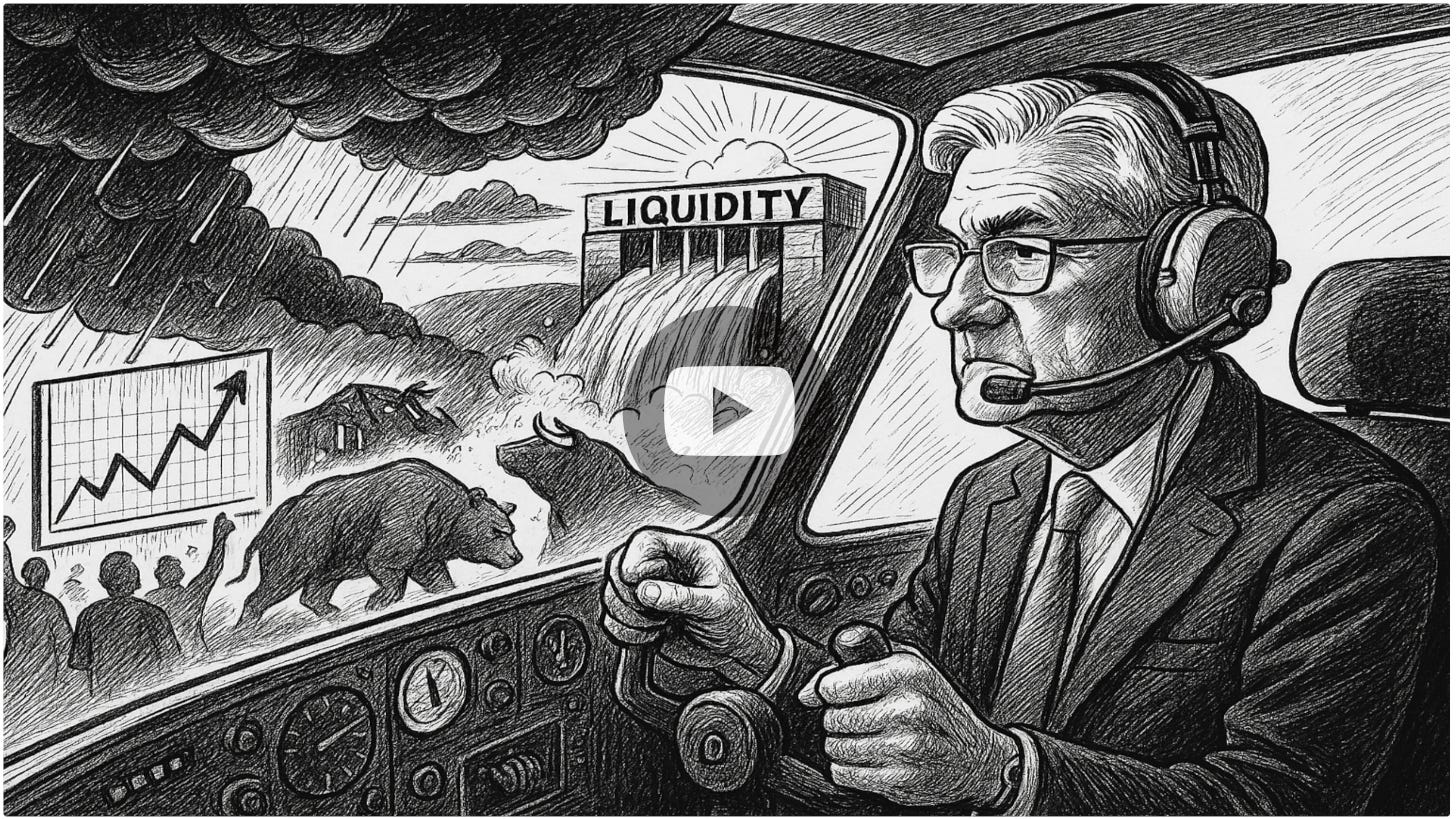
Repo stress masks a Treasury cash hoard poised to flood back into markets, and why boxed-in crude in USO is where that calm gets sold.
Water Trapped Behind the Dam
The funding plumbing is making noises again. Overnight rates jump, the Fed's repo facility gets busier, and the spare cash cushion looks thinner than anyone would like. The letter's argument is that the crack sits in the Treasury's account at the Fed. Through the shutdown the government has hoarded a mountain of cash there, and every dollar parked in that account is a dollar pulled from the banks and dealers who normally lend it overnight. The stress is real, but the cause is a drain left open in Washington rather than anything rotten in the pipes.
That distinction flips the sign of the story. Once Congress settles its standoff, the cash flows back out, and it flows fast. Hundreds of billions re-entering circulation is easing by another name. The tighter the squeeze before the release, the harder the snap afterwards. Liquidity pain of this kind has a habit of preceding melt-ups rather than the collapses people brace for.
Indexes sit at highs while the median stock leaks lower, held up by a handful of megacaps and option desks stacking calls until skew flattens and the optimism reads like satire. Underneath, systematic programs are modeled to sell in most one-week paths just as buyback windows reopen for the year-end push, and the collision shows up as morning air pockets and last-hour ramps. Add a Fed chair who cut one month, hedged the next, and has no official data to steer by, and the story counts for more than the arithmetic. In fog, pilots who trust their instruments outlast the ones who trust the view.
Crude Boxed In by the Cartel
Why oil? Because crude is where the calm looks earned. OPEC+ agreed a token increase in December output and then said it would hold off on further hikes through the first quarter. A small gesture toward supply plus a promise of restraint keeps the price boxed, and demand is too slow to pull from the other side. Whatever risk premium exists is being carried in insurance and freight rather than in the barrel itself.
For an options trader this is the mirror image of the equity setup. In megacap tech, premium is being bid up on the call side by people paying for a melt-up. In USO, volatility is compressing while the fundamentals hand the market a reason to sit still. That is the environment where premium gets collected rather than paid: defined risk on both wings, theta doing the work, and a payoff that arrives if oil drifts through the middle while inventories rebuild and everyone waits for the cartel to meet again. The letter lays out an iron condor built for exactly that.
The letter's own caveat: its desk is minding open positions rather than adding new ones because the book has been swinging harder than usual. A hidden flood does not check which assets are boxed before it lifts them, and a trade that collects calm carries the risk of calm being repriced everywhere at once.
A Courtroom, a Chorus, a Drain
With the shutdown in record territory the official data feed is dark, so second-tier releases inherit first-tier weight: ISM Services and ADP payrolls Wednesday, Michigan sentiment Friday. The same Wednesday the Supreme Court hears the IEEPA tariff case, a ruling that could rewire inflation math, fiscal projections and trade leverage in one stroke. Fed officials, Williams and Waller among them, talk December expectations into shape.
For oil the date is the OPEC+ meeting on Nov 30, when the cartel either confirms its pause or surprises. Until then the tells are freight and insurance quotes, the pace of inventory rebuilds, and above all the moment Congress reopens the drain. The flood is the bigger story; oil is where the letter goes looking for a way to be paid for patience.
This page is the write-up. The full letter, with the trade and its exit rule, is on Substack.
Get the next Tuesday Target free
One options trade. Every Tuesday. Scored in public. The exit rule is on the card, and the letter is free to read.