Bristol-Myers Squibb (BMY): The Overnight Rate Runs the AI Trade
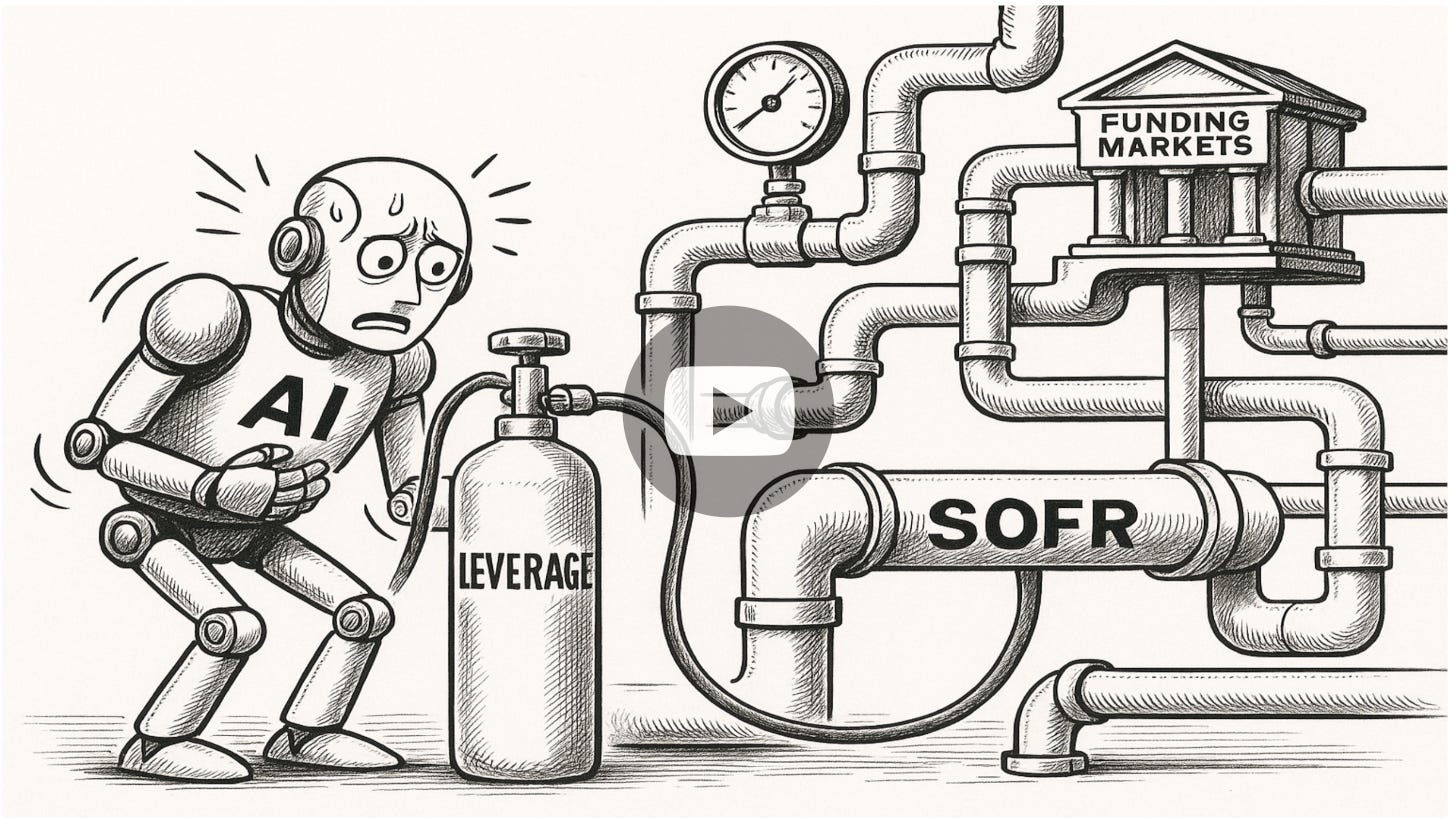
Why the AI wobble traces back to overnight funding costs, how returning reserves loosen leverage, and where a turning pharma chart fits the rotation.
What came of it
I closed this trade on 10 December 2025, after 28 days, at +41% on the capital at risk.
Oxygen Priced Overnight
Loud things take the blame. AI stocks are loud, so when they wobbled the explanations arrived ready-made. The quieter cause sat in the funding market. The overnight secured rate crept above what banks receive for parking reserves at the Fed, and once that ordering flips a bank has no reason to lend into repo when it can earn more by doing nothing. The gap was tiny. Repo desks tightened lines, carrying a levered book got dearer, and the fastest capital in the market did what fast capital does when financing costs rise: it shrank.
My picture for it is oxygen. The overnight rate is what hedge funds and basis traders pay to breathe. Raise the price and the lungs get smaller. Smaller lungs carry smaller positions, and smaller positions leave weaker bids under the names everyone assumed were untouchable. That sequence explains why the tremor showed up first in the corners that had run hardest: AI, crypto, momentum. They had the most borrowed air in them.
Credit noticed first. A wave of hyperscaler issuance, including an upsized dollar deal from Amazon, pushed spreads wider and lifted default protection on names like Oracle. One wrinkle: Saba reportedly sold that protection to banks hunting tech hedges, so at least one sharp desk thought the fear was worth getting paid for. Borrowing got harder, and somebody collected a premium for calling the alarm overdone.
The Plumbing Refills Itself
The government has reopened, the Treasury's cash balance will be drawn down, and balance-sheet runoff looks close to its final stretch. Each of those puts reserves back into the banking system. As dollars return to the plumbing, the overnight rate drifts back toward the policy rate, haircuts in repo come down, and counterparties stop asking awkward questions. Liquidity mends mood long before anyone has a narrative for why the mood improved.
For an options trader this reorders the priorities. The variable worth pricing is the cost of leverage, because it decides how much borrowed money can stand under any chip company's guidance. It argues for holding tech exposure through options rather than raw shares, so the leverage question is settled by a premium paid up front instead of a call from the margin clerk. And it keeps a bid under quality defensives while the liquidity switch resolves, alongside a list of cash-rich AI beneficiaries whose free cash flow improves in the reported figures and not merely the adjusted ones.
A Cluster on the Wednesday Tape
The letter's calendar is dense and most of it lands on Wednesday: VIX expiry in the morning, FOMC minutes in the afternoon, Nvidia after the bell, then monthly options expiry on Friday. That sequence can squeeze implied volatility going in and release realized volatility on contact. Nvidia's realized moves have lately exceeded those of the average small-cap name in the Russell, and one print of that size drags factor P&L across the whole tape into Friday's pin.
Thursday brings the delayed September payrolls. Waller still wants a December cut and calls labor close to stall speed; Jefferson prefers to move carefully near neutral; the market has trimmed its December odds. Minutes plus payrolls decide whether those odds get repriced. Long-end supply arrives Wednesday and TIPS on Thursday, the big-box retailers report through mid-week, and flash PMIs plus Michigan close the week out. The rare-earth licences Washington called a truce have changed little for exporters, so the procurement premium across semis, EVs and defense stays in place.
Pharma Chart Leaning on the Door
Which brings me to the target. Bristol-Myers is a defensive whose chart keeps trying to break out before the fundamentals have fully agreed to carry it. The shorter moving averages are crossing and the longest one has begun to turn up, an early hint of a trend change rather than proof of one, and the recent pullback reads as a better door rather than a warning. Once the plumbing breathes normally again, the pixels tend to mend on their own, and a dull pharma name with a turning trend is a decent place to stand meanwhile.
This page is the write-up. The full letter, with the trade and its exit rule, is on Substack.
- BMY
Get the next Tuesday Target free
One options trade. Every Tuesday. Scored in public. The exit rule is on the card, and the letter is free to read.