Long Bonds (TLT): Selling Storm Prices Into a Drizzle
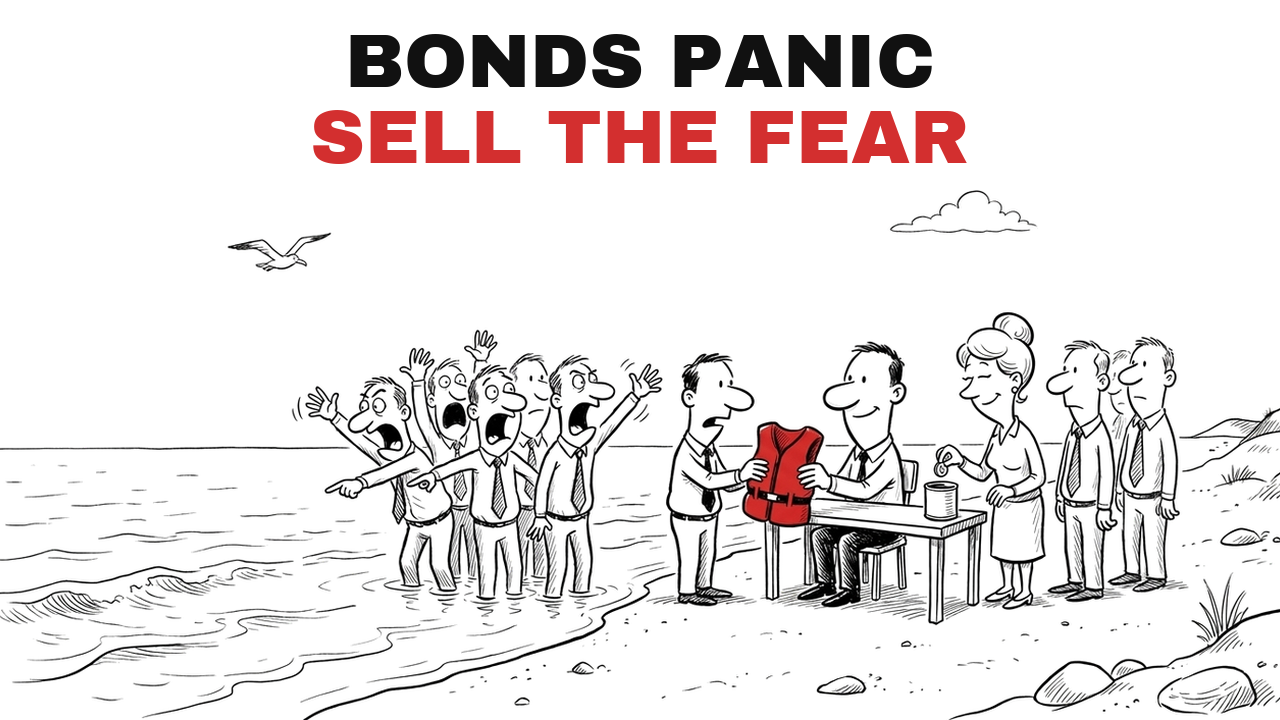
Long Treasury options price a crash the tape refuses to deliver; why that gap exists, how an iron condor sells it, and the prints that could end it.
Crash Prices for a Walk Downhill
Long Treasuries have had a miserable year. The ETF that holds them, TLT, has slid from its late-winter high to its weakest close in several years. The headline reads like a crash. The daily tape reads like something else entirely: a slow, grinding descent in which the worst single session was mild and most sessions were milder still. An asset that moves like that has low realised volatility, however steep the chart looks.
The options on it tell another story. Implied volatility on TLT is richer than on any day in the past year, which means the market is charging crash-grade premiums for an asset that has been walking downhill at a measured pace. That gap, between what the tape delivers and what the options are priced for, is the whole argument of the letter. When fear is priced far above the movement it is supposed to insure, the fear itself becomes the thing worth selling.
Bonds and Stocks on Separate Planets
The panic is isolated. The MOVE index, the bond market's own fear gauge, has jumped sharply in a few weeks to around 113, within reach of its spring high. Meanwhile Goldman's panic gauge for equities sits barely off the floor of its scale. Stocks are calm, bonds are terrified, and they are looking at the same economy. Goldman counts option volume in bond ETFs more than doubled in a matter of weeks. TLT has quietly become the venue where traders place their bets on growth, inflation and the Fed.
Crowding is the tell. Ahead of the jobs report, Goldman's trend model had systematic funds sitting at 99 percent of their maximum short in benchmark Treasuries. When nearly every systematic desk already holds the same hedge, the marginal buyer of insurance has mostly bought. That is the moment I like to be on the other side of the counter.
Selling the Storm Insurance
For an options trader the question is how to collect that premium without taking a view on direction. The structure in the letter is an iron condor: it sells a put below the market and a call above it, with a further put and call bought as insurance, and the net credit comes in up front. If TLT stays inside the band through the planned exit, the credit stays. If it breaks out, the loss is capped by the wings and known in advance. Selling naked volatility into a market this nervous is how people get carried out; selling it with defined risk is how you get paid for other people's nerves.
The story breaks if the grind becomes a run: a hot inflation print or a failed auction that drives bonds fast through the lower side, or a growth scare that squeezes them up through the top. The break-evens on the exit day are the first warning. Further out sit the points where a large slice of the maximum loss has been paid, and the letter's rule treats those as the trigger for a rethink, provided the move was fast and the story has genuinely changed. Near an edge, with a known event ahead, an early close is on the table.
Auctions, Payrolls and the Ballot Box
The calendar before the planned exit is dense. September payrolls came in at 29,000, under every forecast, with July revised into negative territory. Jefferies' Tom Simons called that the nail in the coffin for an October hike, and fewer hike bets take pressure off the long end, which helps the lower side of the box.
Then the auctions: the Treasury sells a large slug of long paper midweek, and a pair of weak sales back to back could drag TLT toward the lower break-even in short order. After that the September inflation print lands mid-month, the Fed decides at the end of October, and the midterms fall the day before the plan closes. The thesis is that most of them pass with less drama than the options are priced for, and the position collects the difference. The exit rule is there for the one that brings the storm.
Get the next Tuesday Target free
One options trade. Every Tuesday. Scored in public. The exit rule is on the card, and the letter is free to read.